Write
the brief.
Get software.
ScodyX plans, writes, self-tests and repairs the build — then ships it to your own GitHub and hosting. Five interchangeable engines behind one prompt.
Your prompt is kept and starts the run as soon as you sign in.
Plan
9 steps · routing, data layer, checkout
Build
wrote src/routes/checkout.tsx
Self-test
14 modules transpiled · 0 errors
Pull request
scodyx/build-4f2a · PR #12
Deploy
netlify · streaming build log
- 30
- credits free, no card required
- 5
- interchangeable engines
- 0
- setup steps before the first run
Row-level isolation on every workspace record
Merchant-of-record billing with global tax handling
Autonomous self-test before a run is marked done
Bring your own GitHub, Netlify and Vercel accounts
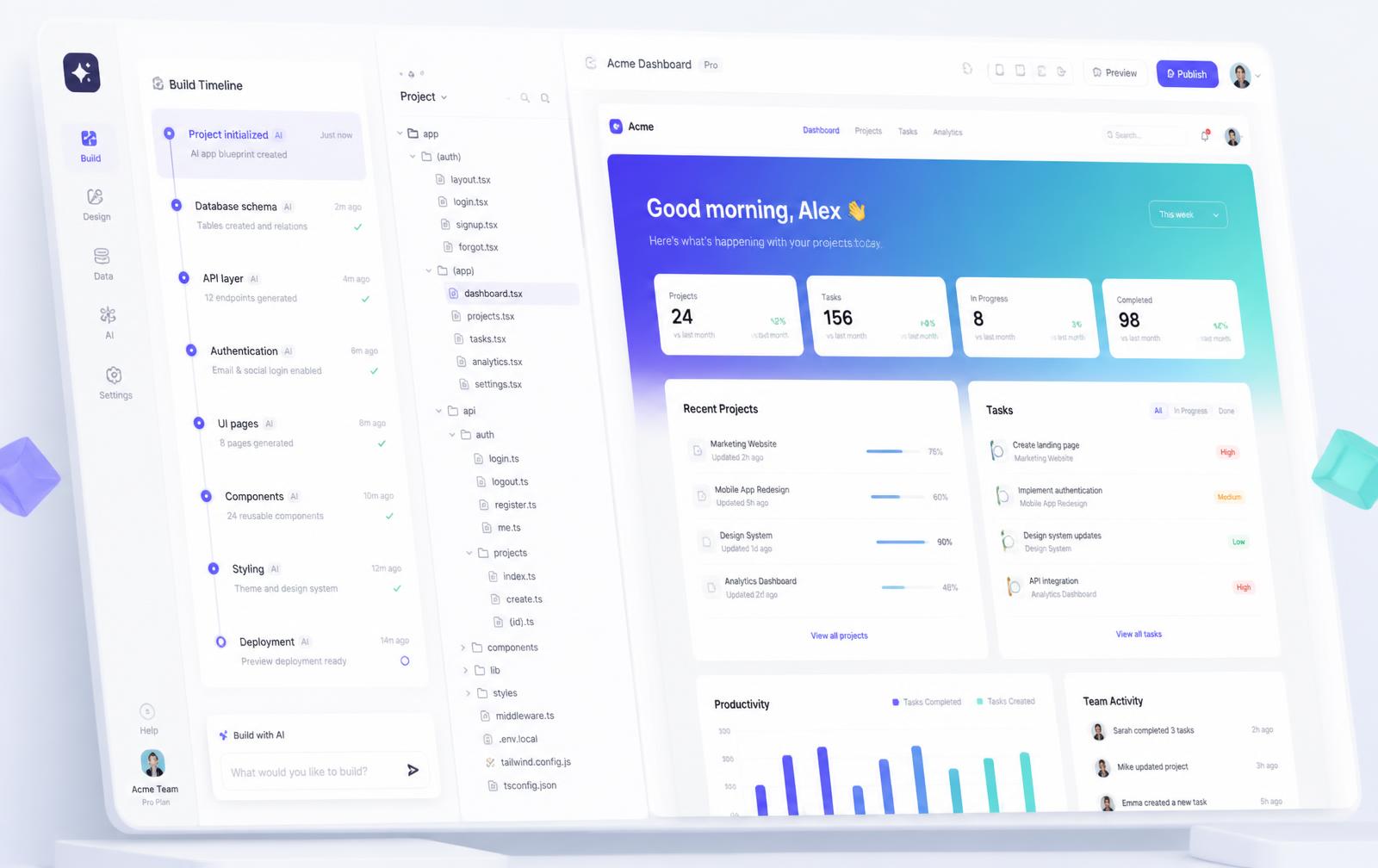
One surface for the whole run: the plan and every repair on the left, real files in the middle, the app itself booting in an isolated sandbox on the right.
Take the tourA build pipeline you can actually read
Nothing happens off-screen. The plan is written before the first file, every repair is a numbered entry, and the whole run exports as JSON or a PDF report.
Describe the product
Write a sentence or paste a spec. Pick an engine, or leave it on ScodyX Core and let the router choose.
Watch the plan land
ScodyX drafts a build plan first — every step, file and check is written to a timeline you can read and export.
Self-test and repair
The bundle is transpiled and statically checked. Failures are repaired autonomously before the run is marked done.
Ship it
Open a pull request on GitHub, deploy to Netlify or Vercel in one click, or export the whole project as a ZIP.
Swap the model, keep the project
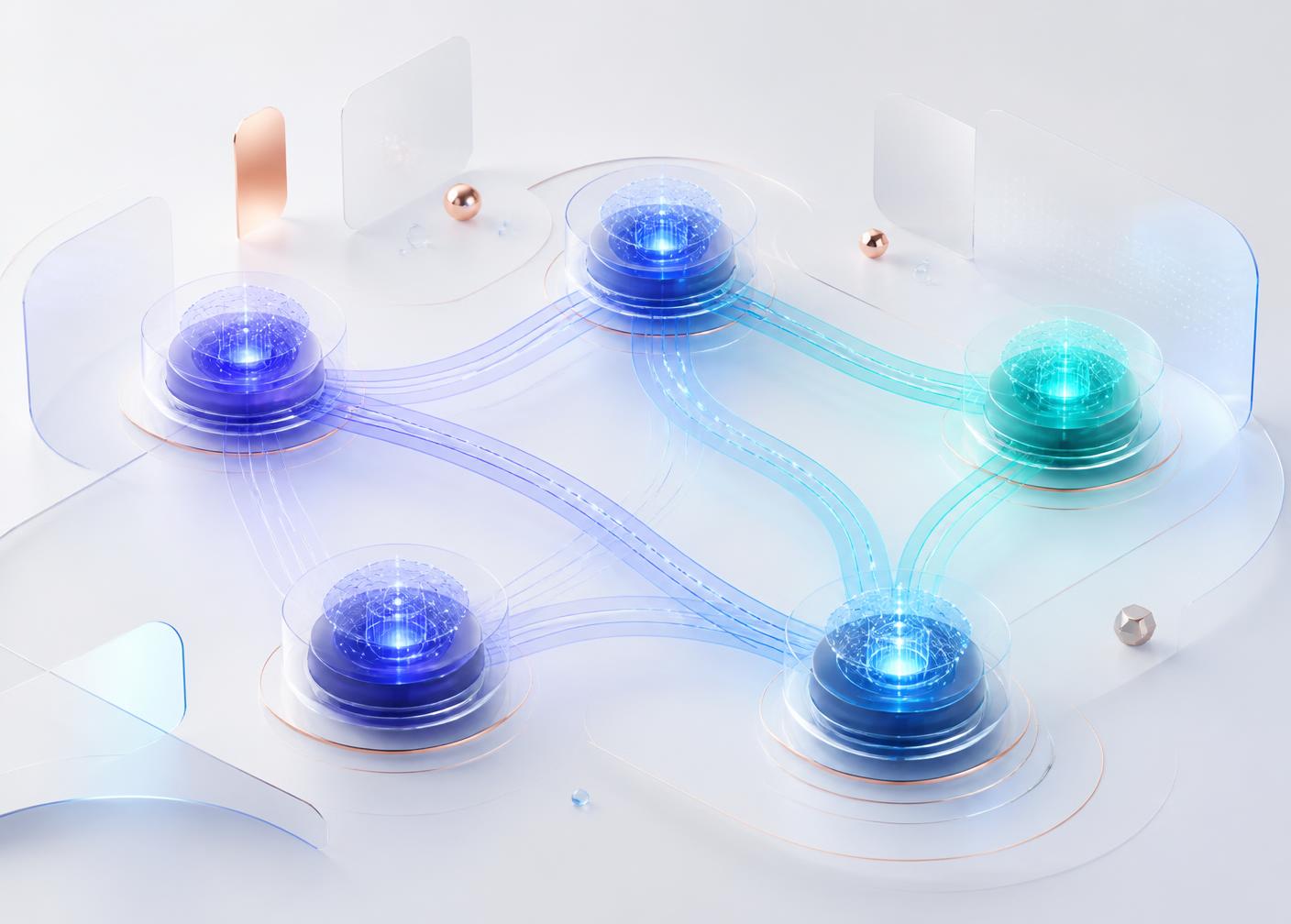
Engine choice is a setting, not an architecture. Start on ScodyX Core, hand a stubborn refactor to Claude, run a bulk scaffold on Gemini — the files, timeline and history stay in one place. Every engine carries its own credit cost and per-user quota.
- 01ScodyX CoreManaged
- 02ScodyX AdvancedTri-tier routing
- 03GPTOpenAI
- 04ClaudeAnthropic
- 05Gemini ProGoogle
Everything a serious build needs, not just a chat box
Data, auth, version control, hosting, roles, quotas, analytics and audit trails are part of the platform — not add-ons you wire up afterwards.
Autonomous build loop
Plan → build → self-test → repair, on every prompt. Each phase is a timeline entry with the exact files it touched.
Five engines, one interface
ScodyX Core, Advanced, GPT, Gemini and Claude behind the same prompt box, with automatic fallback when an engine stalls.
Isolated live sandbox
Generated apps boot in a locked-down runtime with their own module registry and storage. No host access, no shared state.
Database & auth for your app
A real document store and email sign-in through the ScodyX bridge, so persistence and protected routes survive the final build.
Pull request per build
Every run can push a unique branch, a descriptive commit and a PR that links straight back to the saved timeline steps.
One-click hosting
Deploy to Netlify or Vercel from the workspace; provider build logs and the final URL stream back into the same timeline.
Workspaces, seats and roles
Owner, admin and member roles with per-user project isolation, invitations, seat limits and per-engine quotas.
Usage analytics
Credits by day, project and engine with drill-downs and CSV export, so you always know where the burn went.
Billing you can audit
Subscriptions, credit top-ups, invoice numbers and downloadable receipts pulled live from the payment processor.
Audit log for everything
Generate, build, deploy, invite, role change — every action is recorded with actor, target and timestamp.
Template gallery
Ready-made starters — SaaS dashboard, storefront, CRM, LMS — cloned into your workspace in one click.
Secure sharing
View-only project links for clients, plus full exports as ZIP or PDF timeline reports for handover.
Begin from a working product
Each template arrives as real files you can edit, extend, export or open a pull request against — then prompt from there.
Built for more than one builder
Invite your team into a workspace with seats, roles and per-user project isolation. Share a project for review, leave comment threads on a build, or hand a client a view-only link that never exposes your credits or code history.
- Comment threads per project and per build run
- Presence and shared sessions on collaborative projects
- Organisation audit log with actor, action and target
- Export any timeline as JSON or a PDF report

Spend, access and history — all accountable
Limits are enforced on the server as well as in the interface, and every action lands in an audit log with actor, target and timestamp.
Plan-enforced limits
Credits, seats, projects and private visibility are enforced in the UI and on the server.
Per-engine quotas
Rate limits and credit burn per user per engine, with remaining usage on the dashboard.
Role-based access
Owner, admin and member scopes on every project, invite and billing action.
Exportable evidence
CSV usage exports, JSON timelines, PDF reports and downloadable receipts.
Pay for runs, not seats you don't use
See all six plansStarter
$20/mo
150 credits · 1 seat
- 150 build credits / month
- All engines + ScodyX Advanced tri-tier routing
- Unlimited projects
- Full version history
Pro
$50/mo
500 credits · 1 seat
- 500 build credits / month
- Private projects
- Priority engine queue
- Long-context refactors
Team
$100/mo
1,200 credits · 5 seats
- 1,200 build credits / month
- 5 seats included
- Shared workspace + roles
- Invite links with expiry
Answered plainly
- How is ScodyX different from a single-model builder?
- ScodyX is engine-neutral. The same project can be continued by a different engine mid-build, and if one provider degrades the run falls back automatically instead of failing. You are never locked to one vendor's model roadmap.
- What exactly do credits pay for?
- One build run on ScodyX Core or Gemini costs 1 credit, GPT costs 2 and Claude costs 3. Plans include a monthly allowance, and top-up packs never expire while your subscription is active.
- Do generated apps really have a backend?
- Yes. Generated apps can import the ScodyX bridge for a document store and email sign-in, both backed by real tables scoped to your project — not mocked local state.
- Can my team work in the same project?
- Workspaces carry seats and roles. Members get isolated projects by default, admins can promote, restrict and audit, and shared projects show presence and comment threads.
- Who owns the output?
- You do. Every project exports as a ZIP or lands in your own GitHub repository, and hosting deploys to your own Netlify or Vercel account.
Your next product is one sentence away
Thirty credits, no card, no setup. Bring your own repository and hosting whenever you're ready to take it out of the sandbox.
What is evidenced, and what is only alignment
Evidenced items are produced by checks that run against the live system and can be exported. Alignment-only items describe how our practices map to a published standard — they are not certifications, audits or attestations by any third party.
- Tenant isolation
- Row-level security tests run against the live database and are reported in your workspace assurance page.
- Audit trail & credit ledger
- Every run, deploy and credit movement is recorded with a timestamp and request ID you can export.
- Encryption in transit
- HTTPS/TLS is enforced on all platform and generated-app endpoints, and probed on demand.
- ISO/IEC 27001 & 27701
- Our controls are mapped to these standards. We are not certified by an accredited body, and we do not claim to be.
- SOC 2 Trust Services Criteria
- Practices mapped to the criteria. No SOC 2 report has been issued for ScodyX.
- WCAG 2.2 AA
- We build to the guidelines and test key flows. No independent accessibility audit yet.
Full control register and framework mappings: Compliance & standards · Security overview